Chinese characters
that finally stay.
Tongda is a Chinese learning app for simplified characters and vocabulary. Turn each character into a scene you can picture, then keep it with spaced repetition.


Free trialNo adsCancel anytime
A character is easier to remember
when it means something to you.
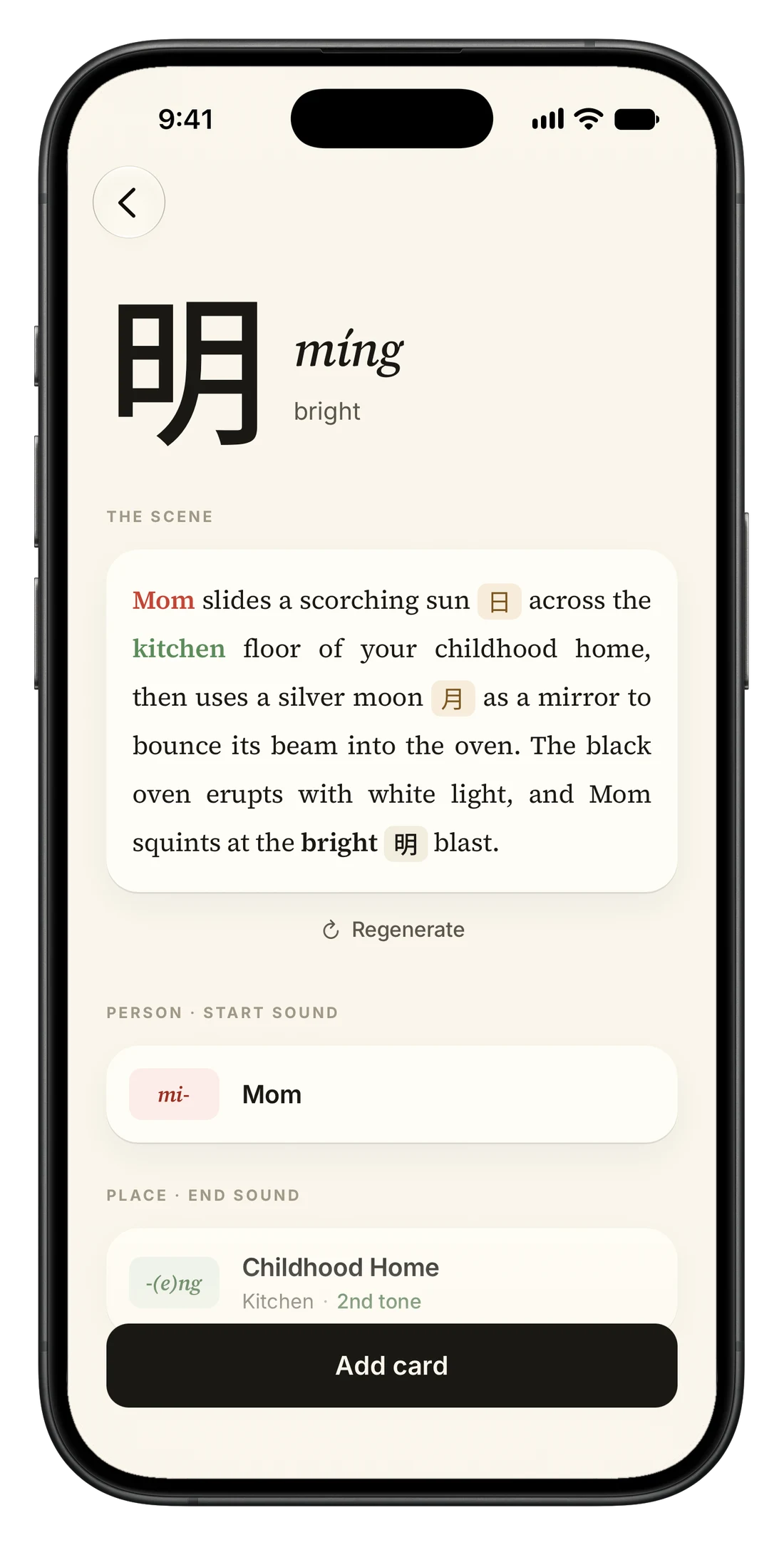
Tongda connects sound, tone, shape, and meaning in one vivid scene, built from people, places, and things you already know.
A person
The start sound calls up someone vivid, from a close friend to a face from film, music, or memory.
A place
The end sound sets a familiar place, and the tone puts the scene in a specific room.
A few things
A component is a part of a character. Each component becomes a thing you can picture, like a blazing sun, a moon, or a beating heart.
You already know
more than you think.
Learn a character. Recognize its components.
Each one helps you learn the next.
A path into everyday Chinese.
Learn 2,000+ simplified Chinese characters and 4,000+ words. Start with the ones you'll use most, then build on what you know.
- 01
Most useful first
Ordered by real-world frequency and informed by HSK 3.0, with nearly every HSK 1 to 6 character included.
- 02
Each one builds on the last
Components arrive before the characters they build, and characters before the words, so every new item reuses something you know.
- 03
Starts where you are
A quick check at the start finds your level and skips the characters you already have down.
Learn. Recall. Repeat.
From your first character to a daily habit.
A little Chinese. Every day.
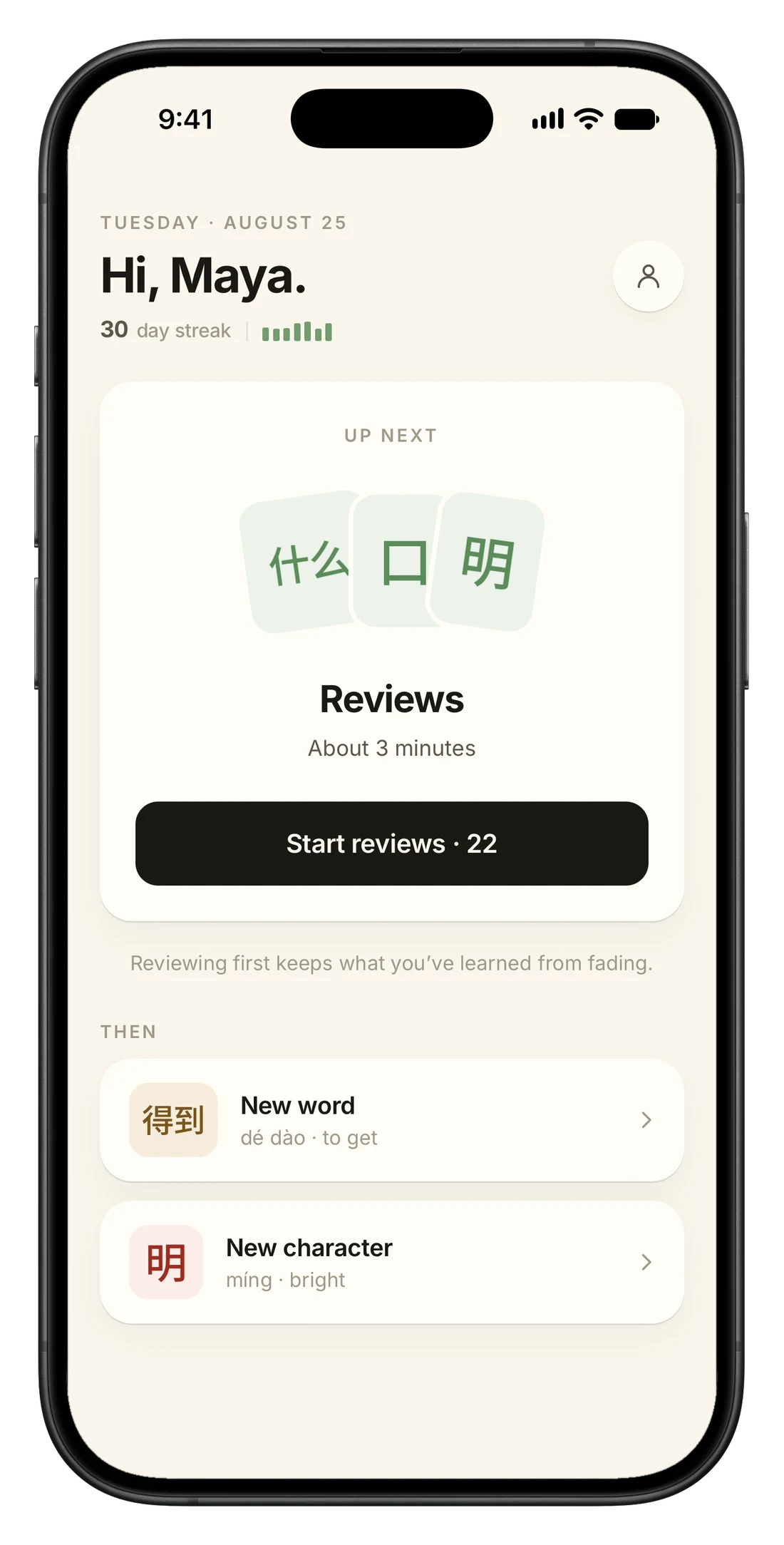
Open Tongda and see what is due, what is next, and how far you have come. Learn and review offline, with separate tracks for characters and words.
Audio is included for every character and word. Your progress syncs when you reconnect. Creating a new scene needs an internet connection.
- Daily reviews
- Character & word tracks
- Offline study
Your world. Your way to remember.
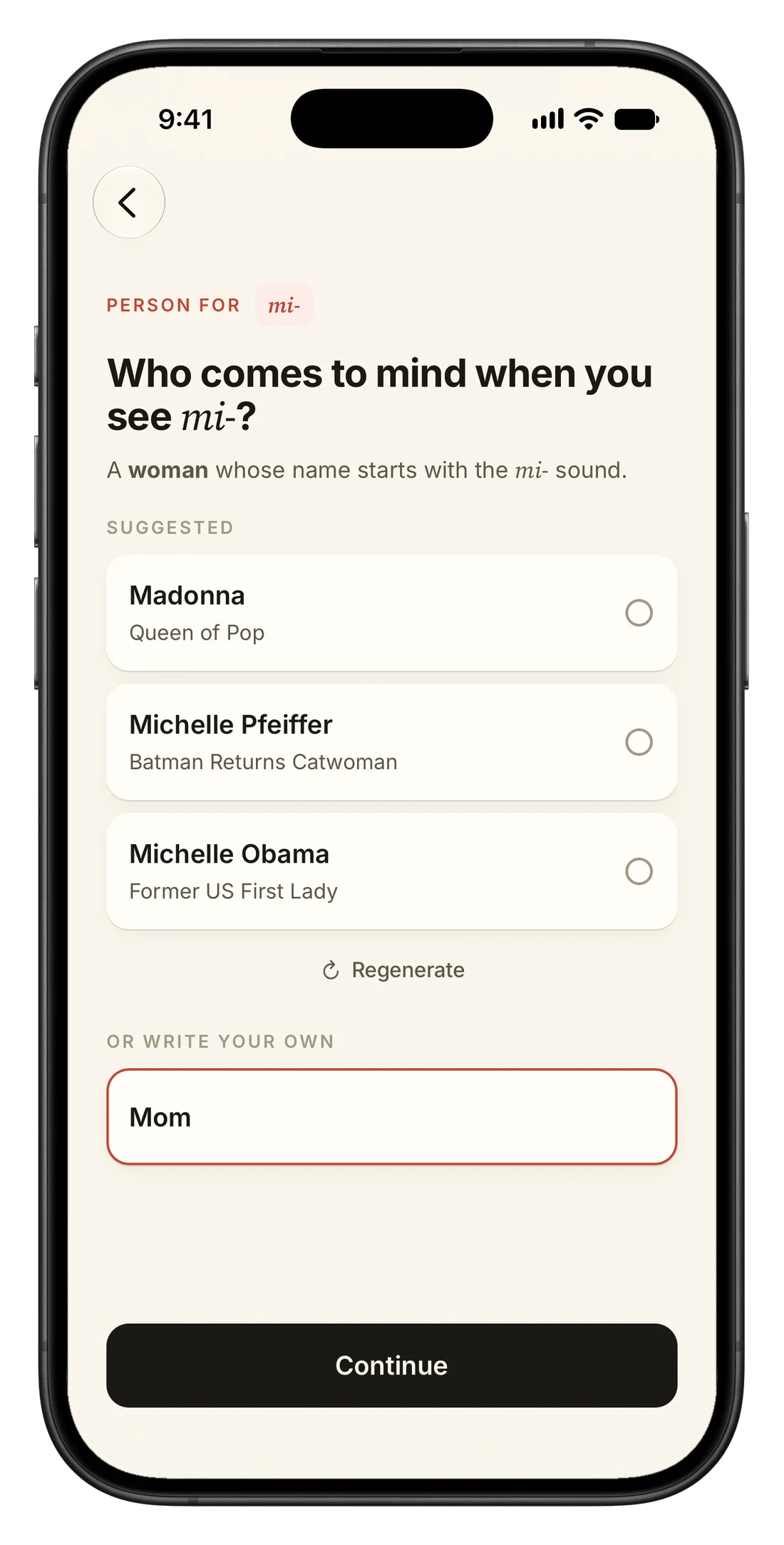
Choose from suggested people and things, or add your own. Set the scene in a place you know. Now the character has somewhere to live in your memory.
Your choices carry over to characters that share the same sounds and components. One scene connects sound, tone, shape, and meaning.
- Familiar people
- Your places
- Vivid things
Remember more. Review a little.
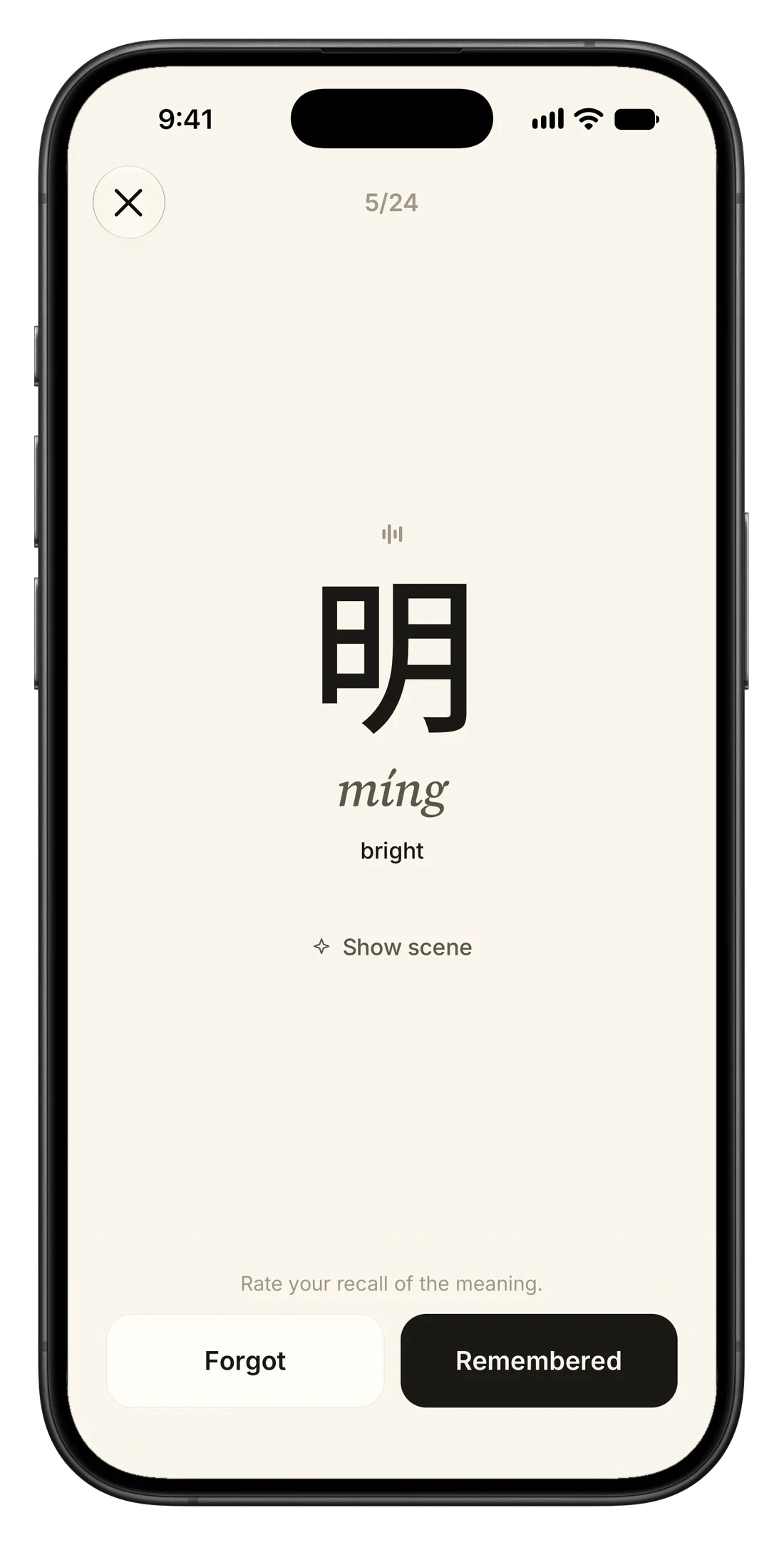
Spaced repetition brings each item back when it is due. Try to recall the meaning and pinyin, then reveal the answer. Need a reminder? Your scene is one tap away.
Grade each answer with one tap. Tongda uses FSRS to schedule your next review based on what you remember.
- Meaning
- Pronunciation
- Listening
- Writing
Frequently asked questions
What can I learn with Tongda?
Do I need to know any Chinese already?
Does Tongda teach simplified or traditional Chinese?
What is a mnemonic?
Do I have to come up with my own mnemonics?
What's the science behind it?
Does Tongda teach grammar or speaking?
Is Tongda based on HSK? Which levels does it cover?
How is Tongda different from Duolingo, HelloChinese, or Anki?
Is Tongda available on iPhone and Android?
Does it work offline?

Start remembering characters
instead of forgetting them.
Download Tongda for iOS or Android. Find your starting point with a quick level check, then learn your first characters.
Free trialNo adsCancel anytime